11.1 Content-Based Methods
The content-based method is the more intuitive of the two classical approaches. Assume that we are an online bookstore and we want a catalogue in which every item (book) can be represented accurately. We represent each book as a multidimensional feature vector. The features could include the author, the publisher, the genre, and the year—anything that we believe describes the type of book—and the resulting vector is the item profile. We then visualize every item as a distinct point within a multidimensional feature space (the orange dots in the figure).
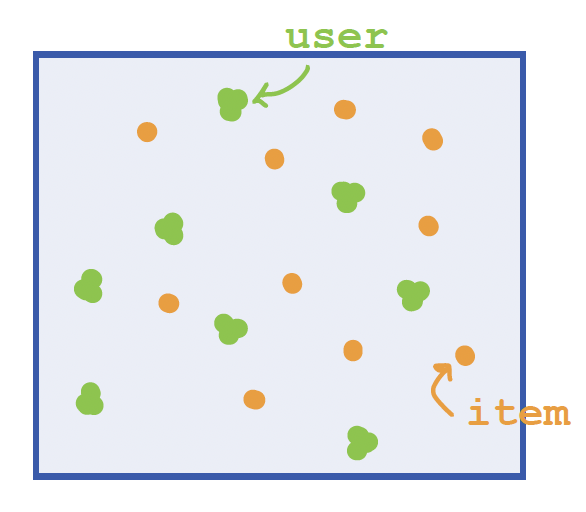
Figure 11.1: User and Item feature space
We keep a bank of item profiles, and we also construct a user profile in the same feature space (the green dots in the figure). Building the user profile is harder. Typically this is done either directly, by asking users for feedback, or indirectly, by monitoring activity on the website (clicks, viewing times, and analysis of items the user has already interacted with). These profiles usually give more weight to recent interactions than to older ones. The recommendation is then based on the items that are closer to the user in this multidimensional feature space. In other words, closeness equates to preference, which gives us a way to make tailored recommendations.
Advantages. The main advantage of this approach is that it does not require any other user’s data to make a recommendation. It is therefore possible to start recommending from day one, without waiting for an expensive collection of user-item interaction data. The method also does not discriminate on the basis of item popularity: a rare book and a bestseller are treated the same way if they sit at the same distance from the user. Recommendations are tied to explicit features, which makes the system relatively transparent. It is easy to say why an item was recommended (matching author, genre, and so on) and how it aligns with the user’s interests.
Limitations. The same mechanism produces limited discovery. Because every recommendation is based on items similar to those the user has already interacted with, the system tends to keep suggesting more of the same and rarely surfaces something unexpected. New users with empty profiles are also hard to place in the feature space until some feedback has been collected.